


Social Study


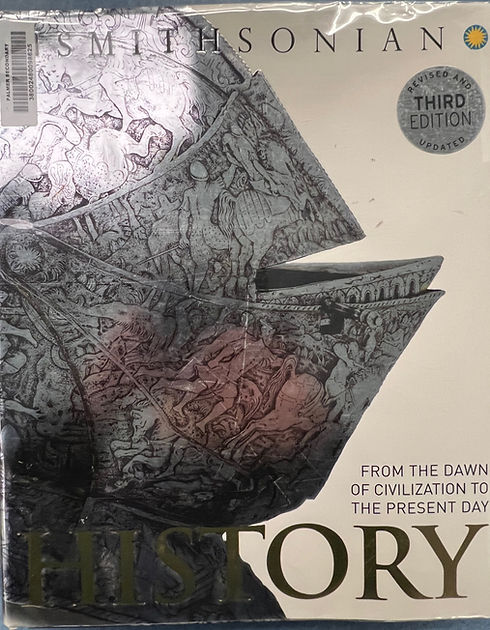
History-Smithsonian Third Edition
Introduction
Social studies’ primary goals are to provide students with knowledge, skills, and competencies to be active, informed citizens who possess the capability to think critically alongside understanding and communicate effectively. To start off, social studies incorporates the study of historical events, such as people, places, and issues that shape the world they exhibit. Through studying these various aspects, students will develop a deep understanding of the significance of human action upon nature and vice versa. Alongside their acquired knowledge about their place in this intricate world, students will be able to dive further into the cultural and economic interconnections between societies and the importance of growing awareness towards environmental sustainability. Moreover, students will also gain research and fact-checking skills alongside communicative capabilities through engaging in class projects such as presenting on Canada's First Peoples, where they can identify biases and opinions to help them find reliable sources. In addition, through presenting, students develop the skill to communicate information effectively, fulfilling the competencies to be an active and informed citizen.

World War II-David Gibbons
Curriculum
The Grade 10 Social Studies curriculum builds on students’ inquiry skills, helping students interpret, analyze, and communicate their findings and decisions. The course covers Canada's political institutions, political and economic ideologies, national identity and autonomy, discriminatory policies and conflicts, economic development, and Canada's role in the global economy. Special emphasis is placed on First Peoples governance and “Truth and Reconciliation.”
-
government, First Peoples governance, political institutions, and ideologies
-
environmental, political, and economic policies
-
Canadian autonomy
-
Canadian identities
-
residential schools and other discriminatory policies and injustices against First Peoples in BC and Canada
-
discriminatory policies and injustices in Canada and the world, including the head tax, the Komagata Maru incident, racial segregation and the destruction of Hogan’s Alley, and the internment of Japanese-Canadians
-
The Holocaust and the concept of genocide

Application
Social studies plays a crucial role in developing strong research skills and verifying sources. Students learn how to locate reliable information, verify the credibility of sources, and fact-check claims before using them in projects or presentations. Furthermore, they practice identifying bias and understanding from different perspectives. These abilities can be applied far beyond the classroom, in fields such as science, supporting the creation of accurate research papers; in journalism, helping ensure accurate reporting; and in everyday life, enabling individuals to critically assess online content to avoid misinformation.
Propaganda poster collection
