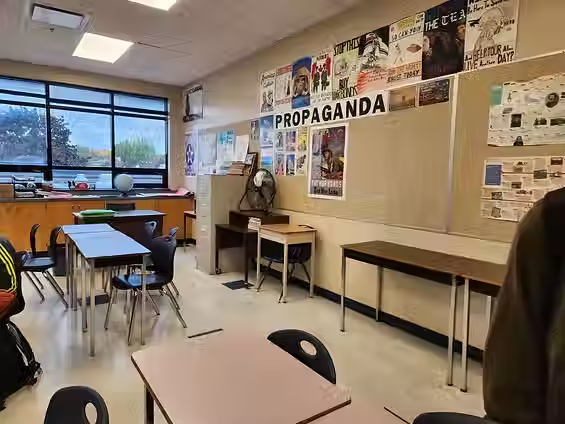
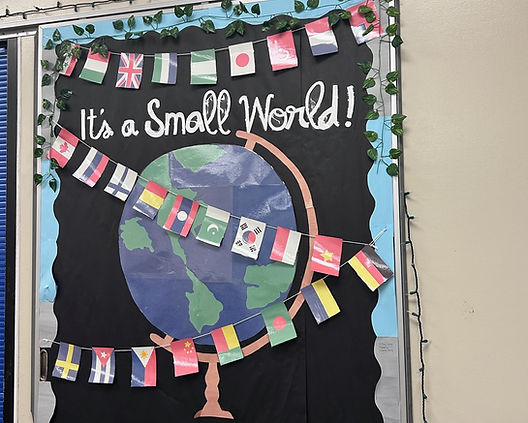
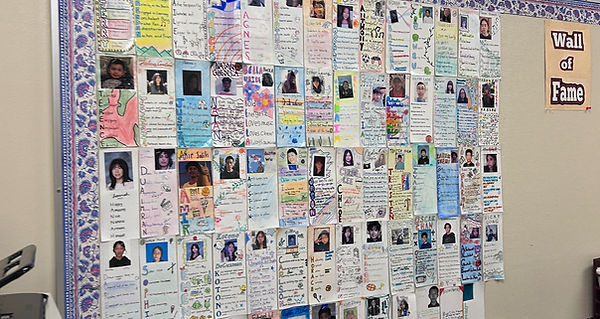
Social Studies raw material
Teacher's Email (1)
Hello Mr. Pablico!
I hope you're having a great day! I have a project in my web development class that requires me to interview a teacher about a course that has been assigned to us, specifically social studies 10. It would be great if we could schedule a time when I can ask you some questions about the course. Thank you!
Frank Xu grade 10.
1. What made you choose to teach social studies?
-
Enjoys stories; reading was a major passion growing up.
-
Finds both fiction and historical reading inspiring and interesting.
-
Teaching socials feels like telling meaningful stories.
2. Why is this course important for students?
-
Teaches fact-checking and source evaluation in an age of overwhelming information.
-
Develops research skills and awareness of bias.
-
Encourages students to share perspectives comfortably and respectfully.
-
Builds skills for having safe, thoughtful discussions.
-
History provides context for understanding the present and future.
3. What topics or concepts are covered in this course?
-
World War I.
-
World War II.
-
Post–World War II events.
-
All studied through a Canadian lens.
4. What is your favorite unit to teach and why?
-
World War II.
-
Contains rich information and strong relevance to current issues.
-
Offers lessons and messages that connect to modern events.
-
Personal interest developed from reading many WWII books growing up.
5. What study tips or strategies do you recommend?
-
No single method works for everyone; students must find what fits them.
-
Visual learners should include drawings in notes.
-
Others may prefer key terms, highlighting, or underlining.
-
Use strategies consistently but stay open to trying new ones.
6. Do you use any special activities or methods to help students?
-
Regular note-taking practice.
-
Paraphrasing exercises.
-
Mini discussions followed by summarizing or point-form writing.
-
Focus on breaking large amounts of information into concise ideas.
7. What skills do students gain from this course?
-
Building strong arguments supported by evidence.
-
Verifying credible sources and knowing where to look.
-
Understanding historical context and personal/global positioning.
-
Presentation skills.
-
Awareness of current world events.
8. Any final advice or message for students?
-
Stay curious and ask why and how events happen.
-
Don’t accept information without thinking; check sources.
-
Explore histories beyond the textbook; pursue topics that genuinely interest you.
Curriculum
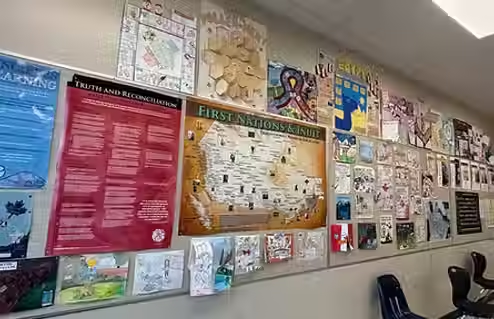
The new Grade 10 Social Studies Curriculum will build on the same competencies first introduced in Social Studies 9 and Humanities 8. Students will develop their inquiry processes and skills to interpret, analyze and communicate their findings and decisions. Course content will include the development and function of our political institutions, political and economic ideologies, our changing identity and autonomy, conflicts and discriminatory policies as well as Canada’s economic development and our role in the global economy. Emphasis will also be placed on First Peoples governance, and, truth and reconciliation.
Teacher's Email (2)
Dear Mr Pablico, I am Samantha Shen from R.C Palmer Secondary School, Web10 class. We are working on a web newspaper project, and we believe your information is ideal for our assignment, so we would like to invite you to an interview about your teaching subject. The interview will take place in your classroom and we will require your permission to record this interaction's audio. We are available on September 25. If the schedule here does not work for you, please send us a date when we would be able to interview you.
Best regards, Samantha Shen
Interview Script For Students:
-
What do you like about Social Studies?
-
Why do you think Social Studies is useful?
-
How does Social Studies help your life?
-
How do you think Social Studies could improve?
-
How does Social Studies help with other school subjects?
-
What is one thing that challenges you in Social Studies?
Student Interview 1: Jace
-
I like learning about history, especially how Canada was formed. It makes me understand where we come from.
-
It shows us how past events connect to today. Like, a lot of stuff happening in the world now is kind of like what happened before.
-
It helps me think more about what’s fair or unfair in the world, and it makes me pay more attention to current events.
-
Maybe more hands-on activities instead of just notes. Like projects or field trips would make it more fun.
-
It helps me with English, because we do a lot of reading and writing essays.
-
Remembering all the dates and names. There’s so many, and I get them mixed up.
Student Interview 2: Chuck
-
I like the class discussions. Sometimes people have different opinions, and it makes it more interesting than just reading from the textbook.
-
It’s useful because it helps us understand people and how societies work. You kind of see the bigger picture of the world.
-
It makes me more aware of different cultures and perspectives. I feel like I get why people think the way they do.
-
If we could talk about more recent events, not just the old stuff.
-
it helps with science sometimes, like geography or understanding resources. It connects more than you think.
-
Writing long answers. I know what I want to say, but it’s hard to put it into words.
Student Interview 3: ParmaI
-
I like social studies because of my teacher Mr. Pablico, he is very chill and I like him.
-
Learning about history and so that we don’t repeat the same mistakes we did in history.
-
In my opinion, social studies does not help in life at ALL
-
I wished we learned topics that apply to the real world, especially the present.
-
It helps me think critically as well as improving my answers.
-
One thing I struggle with is trying to reflect all this learning and be able to apply this in real life situations.
Q: How do you help students that are struggling in your class?
-
I first assess what type of learner they are (visual, verbal, etc.).
-
I tailor my support to their learning style, such as using pictures for visual learners or key terms for those who learn best with words.
Q: How do you know if a student is understanding and not just memorizing?
-
I ask students to explain their work and teach it back to me.
-
If they can repeat and explain concepts, I know they understand the material.
Q: How can you help your students stay motivated?
-
I connect lessons to their interests and give them options to choose topics.
-
I make content relevant by referencing pop culture or music that students know.
Q: What are students currently learning about in your class?
-
One class is learning about World War I.
-
Another class is studying geography.
Q: What do students have problems with in your class?
-
Many struggle with literacy and paraphrasing.
-
Critical thinking is also a challenge; I create sessions to help develop this skill.
Q: What skills does a student learn in your class?
-
Research skills.
-
How to break down and communicate information.
-
Presentation skills for sharing information with an audience.
Q: What is one misconception students have about socials?
-
Students think they need to memorize dates.
-
The focus is actually on understanding why events happened and their causes.
Q: What skills do students learn that they can use in the outside world?
-
Verifying sources and fact-checking.
-
Research and professional communication skills.
Q: What's fun about teaching socials?
-
Teaching feels like story time; I enjoy hearing about experiences and world-changing events.
-
I love reading and sharing stories.
Q: How does social studies impact the world?
-
It builds awareness of current events and teaches students to recognize bias and misinformation.
-
Social studies encourage open, safe discussions about complex issues and help prevent repeating past mistakes.