Math raw material
Student's Question
-
What course are you taking?
-
What do you enjoy about math?
-
What don't you enjoy about math?
-
How would you improve math at Palmer?
-
How has math helped you in life?
Student's Interview
-
Frank Xu: Taking pre-calculus 11; Likes the moments of joy he has when finally getting the correct answer to a difficult problem; Dislikes the fact that the internet is largely obsolete in math, as opposed to research-heavy subjects; Believes that math can be made easy for anyone with extensive practice; Highlights that calculative operations are useful in daily life.
-
Jason Sorokin: Taking math 9; Likes math because it functions in a uniform manner, with a set formula for each problem; Dislikes the amount of memorization associated with math; Encourages the use of flash cards for more efficient memorization of formulas and other aspects of math; Highlights that simple operations such as addition and subtraction can help students with purchasing and selling goods.
-
Aditya Mittal: Taking enriched pre-calculus 11 Incentive; Likes math because it is very fun and teaches useful concepts; Dislikes tests because they put lots of pressure on students; Thinks math would be better if there would be alternative forms of assessment to tests; Math is useful in life because it teaches students how to calculate basic everyday things and handle personal logistics.
-
Parma Tam: Taking math 9; Enjoys the occurrence of funny numbers such as & and 67; Dislikes math because of its difficulty and unavoidable occurrence of mistakes; Believes math could be improved at Palmer if teachers encouraged grade skipping for advanced students; Satirically states that arithmetics are useful in daily life.
-
Ryden Lui: Taking pre-calculus 11; Likes math because it makes him smart, Dislikes tests because math is difficult and dangerously impactful on students' future; Thinks math would be better if teachers encouraged question-asking because sometimes concepts are hard to understand; Because math is study intensive, it helps improve study practices in students.
-
Josiah Chan: Taking math 10; Enjoys the subject of statistics within math; Dislikes everything in math that isn't statistics; Recommends that students seek a tutor to help them with complex problems and studying; Highlights that math can be very useful when calculating prices of goods that students wish to purchase.
Student's Interview (anoynymous)
-
How difficult are the test in math class?
Most test regarding math class would lean towards higher difficulty. -
What do you like about that subject?
I am mostly intrigued by the various topics that my teacher has taught. -
What are your thought on the subject?
Math is not a favorite for most students due to the challenging questions.
Curriculum
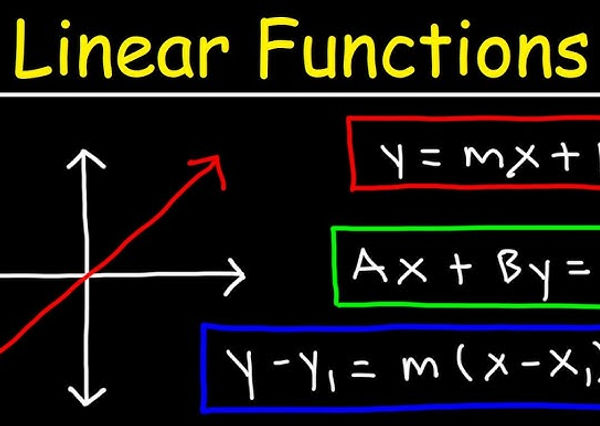
This course combines mathematical knowledge with curricular competencies in problem solving, reflection, and communication skills to help students develop multiple approaches to mathematics. The core curriculum consists of number operations, algebra, arithmetic sequences, linear functions, trigonometry, data analysis, and financial literacy.
Importance
Math is essential in daily life because it helps us make logical decisions - from managing money and budgeting to comparing prices and measuring time. It sharpens problem-solving and critical-thinking skills, allowing us to approach challenges methodically. Whether cooking, traveling, orplanning, math quietly supports almost every practical choice we make.
Math's Program
-
UBC Math Club: Meet other UBC mathematics students through events and programs.
-
UBC Science Co-op: Gain work experience in mathematics between study terms.
-
Putnam Math Competition: Test your mathematical understanding in the prestigious undergraduate math exam.
-
Mitacs funding: Apply for up to $15,000 to fund a four-month internship in your specific area of study.
-
UBC Math Colloquium: Attend talks about research in mathematics
-
Departmental research opportunities: Reach out directly to faculty members to ask about potential research positions.
-
UBC Mathematics outreach initiatives: Interact with elementary and high school students through workshops and sessions.
-
Math job board: Check out employment opportunities related to mathematics.
Math's Application
1. Data Scientist: Uses math, statistics, and programming to find insights from data - one of the most in-demand and high-paying careers today.
2. Financial Analyst/Accountant: Applies advanced math to model markets, manage risk, and design trading algorithms in finance and banking.
3. Engineer (Mech., Civil, Aerospace, etc): Designs and optimizes physical systems - from bridge sand engines to circuits and spacecraft - all built on applied mathematics.
4. Software/Machine Learning Engineer: Uses math-based logic, algorithms, and statistics to build software systems and Al models.
5. Stock Risk Analyst/Economist: Applies probability, statistics, and modelling to predict future events - central to insurance, pensions, and finance.
6. Mathematician: Develops new mathematical theories or applies math to real-world problems in science, technology, and industry - one of the most famed jobs ever.
7. Physicist: Applies mathematical models to understand and predict natural phenomena - from subatomic particles to galaxies.
8. Biostatistician: Combines biology and math to analyze genetic data, model disease spread, or develop new medical treatments.
9. Cybersecurity Analyst: Uses number theory and algorithms to secure data, communications, and digital systems.
10. Literally Everything Else: Athlete, Entrepreneur, Executive Director, etc - they all use math, from calculating basketball shoot angles to analyzing employ satisfaction data.
Math Club
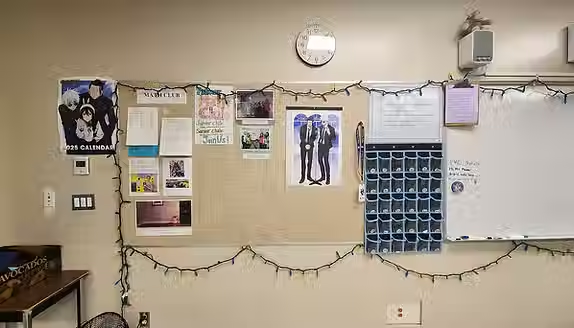
R.C Palmer Secondary School is the home of the R.C Palmer Math Club. The club is split into junior (grades 8-9) and senior (grades 10-12) sections. Catering all students across all skill levels, the R.C Palmer Math Club provides an opportunity for students to enhance their mathematical ability, often beyond their grade level of material. The math club also encourages its members to participate in various math competitions, exposing members further to various difficult math questions to enhance their knowledge and problem-solving prowess. Such competitions that the R.C Palmer Math Club typically participate in include the:
-
Math Challengers BC and Pascal contests (grades 8-9)
-
Cayley Contest (grade 10)
-
Fermat contest (grade 11)
-
Euclid Contest (grade 12)
-
Canadian Open Math Challenge (grades 10-12)
-
Canadian National Mathematics League High School Contest (grades 8-12)
Note, The Junior Math Club division is sponsored by Mr. Kwan in room 206 for grade 8 and 9 students with meetings Thursday after school. The Senior Math Club division is sponsored by Mrs.Wang in room 109 for students grade 10-12 with meetings every Monday after school. Each division has its own complement of grade 10-12 student tutors which help encourag emembers to expand their knowledge of the subject.
Teacher's Interview (Mr.Li, room 117)
-
What is math all about?
Math is essentially just applied logic. Students use their intelligence to come up with unique and increasingly efficient methods to solve problems. -
Why is it important?
Math improves problem-solving skills, as students often run into roadblocks when solving problems and have to work to surpass them and avoid them in the future. -
What is the general student opinion of math at Palmer?
Some students find math challenging and fail to see its relevance in their lives; however, Mr. Li works to change this and makes math fun for students through contests and entertaining games. -
How do you engage students who dislike math? Do you try to change their opinion on the subject?
Mr. Li works toward making math fun for Palmer students through his use of fun games and activities related to math, not just note-taking -
In the perspective of a 12-year-old, what is your opinion of math?
Mr. Li, in his childhood, had to do multiple hours of math homework every day in Asia. He highlights how math is much easier and engaging for students here at Palmer. -
Do you believe that math is present at Palmer in sufficient quantity?
Yes, Palmer certainly offers enough math courses to ensure that students always have a choice of what courses they wish to take, with AP courses as well.- Palmer also participates in contests such as the Gauss, Pascal, and much more. -
What does math teach students outside of the curriculum?
Outside the curriculum, Palmer's math programs teach students how to manage their personal finances, such as taxes or grocery shopping, in the future. -
What is something that Palmer does better than other schools when it comes to math?
Palmer puts heavy effort into preparing students for post-secondary mathematics courses that lead into programs such as engineering, accounting, or the sciences in general.- Palmer takes action to ensure that its students remain motivated in math. -
What do you think the impacts of math are on the Palmer community, as well as society as a whole?
Math builds the general IQ of communities through forcing logical thinking and problem solving; at Palmer in particular, Mr. Li notes that students that excel in math generally go on to be organized and intelligent students. -
What is your favourite part about math; do you recommend it to students as well?
Mr. Li took number theory at UBC and loved it. He recommends that all students take number theory.
Teacher's Interview (Mr.Kwan, room 206)
-
How often will there be test or quizes?
Varies between units. -
How much homework is give each week?
Homework will be given out daily. -
Which textbooks do we use?
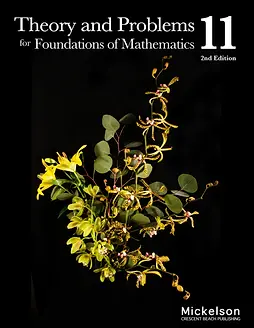
We currently utilized Michaelson text books. -
How should students prepare for tests or exams?
Students should revise important material and avoid cramming last seconds. -
What common mistakes do students make in this course?Student often make mistakes while solving foundation computation problems.
-
How often are new concepts introduced
New concepts will be introduced daily. -
Do assignments include group work
Depend on units -
Are calculators required for this course
Not necessary, but will be useful -
Are online tools required for this course
Yes, Microsoft Teams -
What major unit does this course include?
Major units include polynomials, linear equations, rational numbers, exponent laws, linear equations, similarity of shapes, intro to statistics, incomes, budgets and interests.


.jpg)
.jpg)